Tuesday, June 22, 2010

Thoughts on "The Good Wife" Season Finale...

... I love that show and I am so happy it has been renewed (I am usually very disappointed with the network renew picks).

Before I get into it, a sad Fare-thee-well to some great shows that got axed to make more room for mind numbing "dramas" like Jersey Shore 2:
  • Pushing Daisies (yes, I know it was canceled like three years ago, I am still wounded)
  • Happy Town
  • Legend of the Seeker (still mostly rumour)
  • Eastwick
  • My Own Worst Enemy
  • Kings
  • Kyle X/Y
  • The Cleaner
  • Valentine
  • Easy Money
  • Crusoe
  • Dirty Sexy Money
  • Defying Gravity (Okay, I have no idea what this was about because it was canceled too early)
  • Wolf Lake (a thorn in my side forever.)
  • Eleventh Hour
  • Eli Stone
  • Point Pleasant
  • Mental (though, the ending they gave season one provided enough closure for me not to lose sleep over it)
  • Life
  • The Philanthropist
  • Privileged
  • Raising the Bar
  • Terminator: The Sarah Connor Chronicles
  • The Unusuals
  • And many, many MANY more.
Why do they make watching tv so hard?

Anyways, onto The Good Wife:

*spoilers*
I am really only going to focus on the last scene. The rest was good, too - but what really cinched it as amazingly good television that will always come up in my brain - was the ending.

To set it up for you, the main character, Alicia Floric has two main men in her life (Sidenote: I wonder if they will bring back the ubersexy non-lawyer lawyer from the Orthodox Jew case... rawr): Will Gardner, her best friend and former law school chum; and her husband, the disgraced former DA who cheated on her with a hooker, served time in prison, but is generally a pretty cool guy who we are led to believe was set up, Peter Floric.

Now, Alicia works for Will. As if matters weren't complicated enough, she has also has a thing for him since the first time she met him. But where she chose to give up her career to raise her family and such, he went on to be a partner at Stern, Lockhart and Gardner (Sidenote: Lockhart is awesome! I think she is probably the best character on the show), and it is implied that they lost touch while she was helping her husband's career along. Then he gets convicted of usurping funds from the city of Chicago ... to pay for hookers or something. anyways, the point is that Hubby goes to prison to await appeal and Wifey is back on the job market. Will takes her on as a first year associate, where she has to work hard and compete with someone fresh out of school to be kept on.

Through the season Alicia is found getting closer to both Will and Peter - she even sleeps with Peter, though she keeps him in the guest room and won't let him sleep in the master. She kisses Will and that's when the three or four episode story arc ends in a great scene for a season finale.

Basically, at the last episode, Alicia is left with a choice she has to make: stick with the husband and help him win back the hearts of the Chicago voters in another election campaign; or get with Will. She decides for the husband, and at this point you're like - "Why!? Why must you be the good wife, Alicia!? Why!?" And then Will calls, and your interest suddenly skyrockets and you freak and then you get the most epic ownage ever.

Will tells her, basically, she should be with him.

As he is about to justify this with a mountain of flowery romance, she stops him and goes "Okay. What's the plan?"

And he just stands there looking adorably dumbfounded.

She continues along the lines of having two kids, and a husband and all the romance in the world would have been great twenty years ago in law school, but now she needs more - she needs a plan, and until she has a plan,s he's not budging. And then this slowly (so slowly!) sinks into Will's head and he says "Okay." and then she walks out to hold Peter's hand.

The point is this: It is a mature show. It really is. The woman in me recognized the truth behind this - the core of it. And the woman in me - she rejoiced! It may not be romance, but it is something so distinctly deeper then that, that it works. And I commend the show for portraying a woman strong enough to demand a plan from any man - let alone one who is not hers yet.

I also like the way the show skirted around her complete support of her husband. She walks out on stage with him, to announce his election, but her eyes are hooded and her blackberry (the one she used to talk to Will) is still in her hand. It's a very good balance.

Anyway - check it out, tell me what you think!

Cheers! :)

Monday, June 21, 2010

Teenagers and Voyeurism

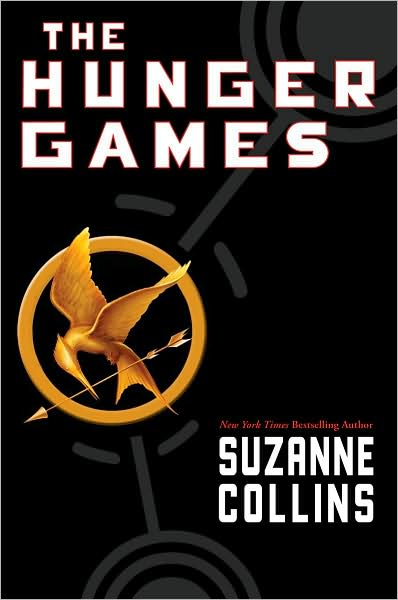
This will be my review on "The Hunger Games" by Suzanne Collins.

Here is the synopsis from Amazon:
In the ruins of a place once known as North America lies the nation of Panem, a shining Capitol surrounded by twelve outlying districts. The Capitol is harsh and cruel and keeps the other districts in line by forcing them to participate in the annual Hunger Games, a fight-to-the-death on live TV. One boy and one girl between the ages of twelve and sixteen are selected by lottery to play. The winner brings riches and favor to his or her district. But that is nothing compared to what the Capitol wins: one more year of fearful compliance with its rule.
Sixteen-year-old Katniss Everdeen, who lives alone with her mother and younger sister, regards it as a death sentence when she is forced to represent her impoverished district in the Games. But Katniss has been close to death before—and survival, for her, is second nature. Without really meaning to, she becomes a contender. But if she is to win, she will have to start making choices that weigh survival against humanity and life against love.
Acclaimed writer Suzanne Collins, author of the New York Times bestselling Underland Chronicles, delivers equal parts suspense and philosophy, adventure and romance, in this stunning novel set in a future with unsettling parallels to our present.

It is a YA. But it is the most comprehensive, complex YA I have ever read - And I have read a lot of YA. It has deep themes and allegories to our own present media-obsessed culture, and the characters not only develop but they cease to become characters and morph into people. It is an amazing book and I truly think it ought to be on mandatory reading lists for teenagers in highschool henceforth.

Here are some websites to check out if you're interested:

MockingJay.Net - in general, a forum and blog full of information and pictures and such on this trilogy. I like it a lot, though it takes all my concentrated effort not to click on the spoilers ...
http://mockingjay.net/

A Game (kind of weird, but meh - whatever makes money?)
http://westfieldcomics.com/store.cgi?cid=1&SearchString=Hunger%20games&sc=329611511056186172&U=1276255773984&SearchDescs=1


The plot is as outlined - in a dystopian future, there are 13 (technically 12, since the 13th got smashed to smithereens) and a Capitol. Due to a rebellion many years before the book is set, the districts are forced to participate in this tribute game - the Hunger Games - in order to appease the voyearistic Capitol, and you know, to get things like food and such. The winner of the Hunger Games gets made for life - the losers, well they die.

And that's beauty of it - the realness of it that is so unreal to the reader. Who can imagine a culture that avidly watches teenagers fight to the death? And yet it is so well done, every word in exactly the right place that you don't realize it is basically "Death Race 2000" in a literary form. It is a critique on the way we entertain ourselves, the blood and the gore we want to see - what intrigues us and pulls us in. It is, in short - a reminder of why I hate reality tv.

It is more then that, of course - the prose is excellent, the characters are so well developed they all but leap off the page and smash you in the face. And it is such a heartbreaking story - no punches are pulled. People die - young people die, and other young people kill them. There is no reprieve. And even the reprieve that one character is given is not a reprieve at all - since living when other have died, being the catalyst of so much death and having seen such terrors up close - living becomes its own cruel curse.

Peeta is amazing. No, really - read this book and you will suddenly have a bookcrush on Peeta. You really will. He is just so tragic and so damned steadfast, he reminds me of the steadfast tin soldier - he knows the truth, somewhere deep inside, he knows the truth. And yet, he stands there, through all weathers and manners of cruelty to protect that thing which he loves.

He is amazing.

Katniss is also amazing, though in a different way. She's practical and stubborn and such a rational narrator that it emphasizes the insanity around her. The pain and death all around her is only heightened when she talks about it, even though she does it in a way that is cool and collected, rarely breaking this form. She is a strong female character - which I love - and she has deep flaws, which makes her even better. She is intensely loyal - to her mother, her little sister, her best friend and hunting partner, Gale - but she is also very suspicious. And her relationships with other characters throughout the book display the truly tragic parts of this future society.

Her and Gale, for example. Theirs is a relationship that is complicated and yet, refreshingly simple - he likes her, she doesn't notice this. At least, she doesn't give any real indication that she notices it. But there exists a tension between them that goes beyond just friends, but seems too charged to be brother/sisterly. Instead, the reader is left trying to figure out if Gale loves her like a girlfriend - and if she wants to love him that way, too.

Katniss' first love is likely her little sister. And it is a very interesting relationship that transcends sisterly and borders on Motherly. She takes care of her sister in a way that exceeds normal older sister duties, and she delights in her sister's triumphs and strives to make her happy, like a daughter. And it is so tragic because her sister is so young, and is the girl picked as tribute, even though Katniss has fought tooth and nail to get her exempted as much as possible, her last line of defense is rather to go in her sister's place, resigned to her own death.

And that is another interesting feature of this book - the comparison, through Katniss' narration, between her and Peeta and the other tributes from the less well funded districts, and those from the first four districts that are better funded and relish the opportunity to kill each other for the glory of their homelands. Where Katniss and Peeta and a few of the others shrink away from interviews and the glitz of the games, the nicknamed Careers (as in, it is their career to train for this) rush forward, confident in their own superiority. The play between the Careers and everyone else is ingenious - it humanizes them in a way that would otherwise be impossible, though it is a humanization that sneaks up on you. When one fo the Career girls dies from big bites and begins to puss and such, she attains a humanity she would have otherwise been denied. The same is true of Foxface, the non career but also non character really. She never gets a name. But when the Reader realizes she's always been there, just on the periphery, stealing food and watching the others - she had opportunity to kill them, but she didn't - it's a humanization that hits you long after the character is dead and gone.

It is a great edition to the social criticism on voyeuristic tendencies in our society - it is rich in detail and anxiety and it hits all the right spots. It is, essentially a Young Adult that is so much more then a young adult book - it is a thinking book. And this is what I hope to write, so it strikes me as even more important.

So, go pick up this book - it is a 10 - a perfect, rich, amazing 10.

If you like it (and you will) - here are some other interesting takes on the genre:


Margaret Atwood, Oryx and Crake and The Year of the Flood
Carrie Ryan, The Forest of Hands and Teeth and The Dead Tossed Waves

Max Brooks, World War Z

David Wellington, Monster Island, Monster Nation and Monster Planet

And the Movies:
Diary of the Dead
The Condemned Death Race 2000 and to a lesser extent, its remake Death Race

And the new show, Unknown Persons

Anyways, go pick it up - I need to go get the second book, Catching Fire! So excited! :D

Cheers!


Friday, June 18, 2010

Sad, sad news for the Literary World ...


José Saramago

(November 16, 1922 – June 18, 2010)

Now I am not just saying this because he is my countryman, but Jos
é Saramago was a great writer. Maybe it came from the sheer thought put into each idea that he expressed, or the fact that he wrote in a speaking-like lilt that made the stories roll forward, but whatever he had it was a gift that was amazing and noteworthy. He penned 29 literary works including the controversial "The Gospel According to Jesus Christ" - a book that in 1992 got him into a fight with the Portuguese government when they refused to put it forward as their submission for the European Literary Awards because of the offense Roman Catholics would take. He also penned "Blindness" - made into a passable movie in 2008 - a tome about how as human beings we are rational, and yet he fail to see rationality.

He was a master of magical realism - a technique used predominantly by South American author and he was not one to shy away from expressing complex and often controversial ideas through his writing.

For more on his life, his work and his death, please visit the following websites, and if you get a chance, I would recommend reading his books - they are difficult to read, but they are well worth the mental olympics.

New York Times Obituary
http://www.nytimes.com/2010/06/19/books/19saramago.html?src=mv

Associated Press Obituary
http://www.google.com/hostednews/ap/article/ALeqM5ikq_R-HfkK1eF1T5wt9A1mGLkn9wD9GDNU300

Wikipedia Entry
http://en.wikipedia.org/wiki/Jos%C3%A9_Saramago

"The Unexpected Fantastic" a NYT article by Fernanda Eberstadt
http://www.nytimes.com/2007/08/26/magazine/26saramago-t.html

Translated Nobel Lecture
http://nobelprize.org/nobel_prizes/literature/laureates/1998/lecture-e.html

"Societies of Mutual Isolation" essay by Benjamin Kunkel
http://dissentmagazine.org/article/?article=927

Official Website
http://www.josesaramago.org/

Blog (Saramago Society)
http://caderno.josesaramago.org/

There be changes ...

So how do you like all the new changes to the blog as I learn how to use the internet? I am experimenting still - there are all these "upload this!" and "personalize that!" s that I have yet to truly figure out. It's fun, though, so go figure?

Anyways - 'tis summer!(Almost)

(from http://shoesobsessions.files.wordpress.com/2008/06/summer.jpg)
And with summer every four years comes - World Cup! :D

I, being a European Canadian with immigrant parents and a WASP boyfriend - LOVE World Cup (and soccer, too, I guess). Of course, I have decided Portugal must win this time! (Cry with me if you know anything about World Cup because the last game, they tied with the Ivory Coast - they have an awesome team. Next they are against North Korea - I will refrain from commenting on the North Korean's "soccer" and then they face Brasil. Good Goddess, I am nervous just thinking about it.). You will all vote for Portugal, right? :)

(from http://www.soccerworldcupafrica.co.za/images/teams/portugal/action1.jpg)
I am also cheering on (in no particular order) Argentina, Nigeria, South Africa, Paraguay, South Korea, New Zealand and the US. Personally, I think it is time some country that is not in the EU or South America, ought to win. There are some brilliant teams - brilliant. 4 years ago, Trinidad and Tobago were an excellent team - they had finesse, they were fast - they were an altogether excellent candidate for World Cup. Because of a questionable call by the ref, England beat them, kicking them out of the race (it ended in a depressingly terrible game between Germany and Italy - and the best was my professor was German, they lost, and he kicked out everyone with an Italian jersey - ha ha ha)/

In Ontario, the bars are now open from 10 am to accommodate the time difference in the games! The government is acting like this is some kind of favour they're doing us ... I want to tell them that their alcohol laws are archaic and they reflect the prohibition times we were supposed to have left a long time ago. In Ontario the drinking age is 19 (18 in most of the rest of Canada) which is ridiculous, considering you can vote, get married, hold office, etc. at 18.

Ranting aside, I plan on working this blog alot more - so check back often!
Cheers! :D

Wednesday, June 16, 2010

British Science Fiction


John Wyndham The Midwich Cuckoos


*** Warning: This is a picture heavy post - mostly just because I adore the imagery associated with this book. Seriously - how can you not love this artwork? These covers are great! ***

I am a huge fan of the bizarre. Once, at Niagara, I forwent the romantic spots in the "Honeymoon capital of the world" (my best friend was there with her fiancee that weekend, too funnily enough, and they did all the sappy things) and dragged my bewildered boyfriend who hates spending money to Ripley's Believe It Or Not Museum. It was great! Like, really great - I love these odd quirks and collections! There I found lots of things - dominoes made of bones, a dress made out of folded Starburst wrappers, an albino beaver - cool posters that were optical illusions, etc. That is just the type of girl I am.

> For the record, I thought it was a vastly romantic weekend - and so did the Boy, after I insisted he take a picture of me in the stocks that were on display with the plaque about how stocks were common in France up until the 1970s. His exact words were, "Okay, I have to picture - I'm going now!" while I struggled and yelled at him. Oh, he's a funny guy, isn't he? Ha ha ha, no. <

So it is no surprise that I am in for it when it comes to science fiction. This book in particular warms that cynical, jaded part of my sci fi loving heart. Let me explain:

As a child, my parents worked an insane amount of hours in an attempt to make a stable and financially viable living arrangement for me and my sisters. As such, from the age of 5 months, I stayed with my grandparents during the week and with my parents on the weekends. Grandmas, well -most of them, are notorious for being lax and sweet and sleeping a lot. My mother's mother was kind of like that, minus the sleeping. That and she could wield a wooden spoon like no other (Remind me to tell you that story sometime...). Anyways, I am an insomniac - not a severe one, but I don't sleep very much if at all, and I might average about two to four hours of sleep per night in my natural state - missing a few nights every couple of days, where I just lie in bed and meditate, sleep being my elusive friend. So anyway, living in Toronto, my grandma had a three bedroom bungalow with one of the three bedrooms being a living room. That was where I slept. So ... at 1am when I was still very much awake, and yet everyone else was snoring, I would turn on the tv and watch whatever was on. Usually that included Science Fiction black and whites or westerns. I forwent the Westerns most of the time in favour of the Sci Fis. And that was when I first saw the movie "Villageof the Damned" (1960). I fell instantly in love with the creepy children and the low voices of the professor and the narrator (I have realized I have a thing for low, throaty voices, which explains my love of Rex Harrington, William Hutt and Christopher Plummer.).

The film was really good, but it took me awhile to get to the book. And then someone bought it for my 24th birthday and I was able to read it again this past May. And I fell in love all over again.

So this will be a review of the novel - not the movie, but it will include some other tidbits and a kind of general discussion of John Wyndham, British Science Fiction, Cold War literature and my own lunacy.

Enjoy!

The Synopsis (from Amazon):

In the sleepy English village of Midwich, a mysterious silver object appears and all the inhabitants fall unconscious. A day later the object is gone and everyone awakens unharmed - except that all the women int he village are discovered to be pregnant.

The resultant children of Midwich do not belong to their parents: all are blonde, all are golden eyed. They grow up too fast and their minds exhibit frightening abilities that give them control over others and brings them into conflict with the villagers just as a chilling realization dawns on the world outside ...
Brief, if good, synopsis.

The story opens with a narrator on the outside of this strange event. Richard Gayford, due to his strange position as resident of Midwich and absentee of the event, begins by outlining the scene as the reader first encounters it: Ambulances and police and people who walk or drive towards the village inexplicably get knocked unconscious. When removed, as Gayford and his wife are when they defiantly go through the military blockade towards the village, the people (and a canary) are at once conscious - ignorant as to what happened to them. Gayford also adds a few stories, the most notable about Zellaby - the resident professor and intellectual whose thought experiments and observations are what predominantly drive the story.

A day later, everyone wakes up - cold and confused, no one noting any damage except for the casualties caused due to the unconsciousness itself (ex. seniors dying from pneumonia after being cold for so long). Gayford and his wife return to their little cottage, and though there is a military presence - mostly noted by the reader as the introduction of Gayford's old friend, Westcott - the village more or less, returns to business as normal. Until Zellaby's daughter discovers that she is pregnant, despite the fact that she is a virgin. She is quickly married to her long time boyfriend, a member of the military base a little ways out of town. Soon after it is discovered that nearly all the women of child bearing age are pregnant - including the vicar's teenaged niece who happened to plan an unfortuante visit to Midwich that coincided with the strange incident.

Zellaby's wife becomes the driving force behind the calming of the women, herself also pregnant.

I will leave the rest to your imagination - obviously, children are born. They are strange children - very strange. And there begin to be incidents that make the villagers nervous, the catalyst to action.

Now onto an analysis.

The Midwich Cukoos is a brilliant piece of work - starting with the title itself. A cuckoo is such a bird that it lays its eggs in the nests of other birds, allowing the other birds to nurture and care for the egg until it hatches. Kind of like a sneaky sleeper cell like bird. In this case, the term "cuckoo" applies to both the men and the women of Midwich (in terms of them being the victims of the cuckoos) . The babies that are implanted in the women of Midwich grow within the women and throughout this period it is not known whether the babies are theirs - the women begin to doubt that they are pregnant with their own offspring relatively soon - due to a combination of events, including the strange proximity of pregnancies. Once born - and all the kids look exactly the same with golden hair and eyes - the men come into play, one even threatening his wife with violence. Strangely enough - the man who hits his wife is seen beating himself through a window. Strange events continue to plague the village. But throughout all this, the men and women of the village continue to foster these children - now sure that they are not the offspring of the villagers themselves. This is a brilliant scenario because it serves as a great plank to jump into many different topics - the bond between mothers and children, the necessity of blood relations, the relationships between men and women when children are introduced, etc. Using the analogy to Cuckoos is the brilliant way to cinch it all together completely. The Cuckoos are never explicitly defined or even seen - though Zellaby speculates who they are and what they want, or even if they are the next evolutionary step for humans - there is no visual beyond the silver specter of the first few pages. This is also a well calculated move: leaving them ambiguous allows for the Reader to really speculate at the reasons behind the series of events, rather then the specific people themselves.

But what I think is particularly remarkable about this book - and all of John Wyndham's books - is the lack of compassion for the invaders. This is a story set within the confines of the Cold War - the secrecy and the races and the speculation of what lay on the other side of the Berlin Wall. It was the 1960s - Cold War paranoia was at its height and the book reflects this in an almost tongue-in-cheek manner that flows effortlessly over the words of the plot. The most evident form of this is when the military shuts down Midwich from the rest of the world (there is a ban on publication of anything to do with the Children) and the news Zellaby and Gayford receive from Westcott about what was done to The Children in Russia (kaboom). The treatment of the military and the idea of "sleeper cells" runs throughout as a reminder that the whole world was on edge in a real way at the time. There was actual real concern over Soviet powers and the ability to have spies and agents West of the Iron Curtain. I think that the political messages of the story are intertwined with the plot so well that takes a second to realize this, but it is nothing to swallow it as truth.

Unfortunately, this blogging thing is preventing me from uploading much more, so we'll cut it there. I would love to discuss this more in the Comments, or if popular - by a sceond post.

Thanks and Cheers! :)


For more information on John Wyndham:

Article from the Globe and Mail, I enjoyed it.
http://www.theglobeandmail.com/books/the-b-movie-prophet/article1604856/


Further adaptations and such (thank you Wikipedia!)
The Simpsons, "Wild Barts Can't Be Broken"


The original British Adaptation and its sequel (1960 and 1963, respectively)
Note - there is also an American version with Christopher Reeves - I liked it alright, but it lacks the coolness of the British versions that is more true to the book. Americans - always have to see the humanity in things. :)