Monday, July 25, 2011

Aliens and Toxic Waste: A Review of "I am Number Four"

In the beginning we were nine.
We left when we were very young, almost too young to remember. Almost. And now …
Three are gone.
We are here to keep our race alive, which was almost entirely obliterated. We’re just trying to survive.
Six are left.
But we are hunted, and the hunters won’t stop until they’ve killed us all.
They caught Number One in Malaysia.
Number Two in England.
And Number Three in Kenya.
I am Number Four.
I know that I am next.
Back cover, I am Number Four by Pittacus Lore


Nine aliens and their guardians are hiding on Earth … protected by a charm that means they can only be killed in numeric order, three are already dead. John Smith is Number Four.
John has to keep moving: he’s got to outrun his past; escape his mortal enemies the Mogadorians; and blend into normal student life. But above all he must pray his newly found powers – alien legacies from home Planet Lorien – don’t give him away before he can complete his destiny, unlock his powers and protect his future.

            An alien novel – oh yes, my X-Files loving self was hollering on the inside. Love Alien stories. Especially angsty teenaged alien stories. 

         I am sure this book needs no introduction – after all, I could never hear myself think due to all the creaming fan girls all up about Alex Pettyfer (I will admit – pretty baller actor, liked him in Beastly – have yet to watch I am Number Four), however for the sake of uniformity, I will try and make my brief summary understandable: There was a planet that was invaded by this bad planet, and the good planet sent 9 kids and their guardians to Earth so they could somehow save their population. These nine kids have special legacies – that is, powers – like flashlight hands and super speed and strength etc. They are still running from the bad aliens – but there is a catch – a charm was placed on the nine, and as long as they stay away from one another, the bad guys will have to kill them in order if they can kill them at all. Confused? Okay, it gets denser. 


            The nine are all separated like, and e are following John Smith – a new name for him, he has to change it every time he moves – and he moves often, what with the being on the run thing. He longs for a normal life, and has a few select memories of his old life black on Lorien. He lives with his guardian, Henri. They just moved to Ohio from Florida, and of course, John meets a girl – and a best friend. The girl is Sarah – a photographer with a heart of gold and a bad ass for an ex-boyfriend. The friend is Sam – heart of gold and a knack for UFO theories – much to John’s astonishment. 


            We get a pretty good back story of Lorien and why John has come to Earth, but it’s in bits and pieces – my preference by the way, I like to discover tings with the characters. We come to understand that the Mogadorians are pretty bad ass – they ruined their own planet … then immigrated to Lorien and ruined that, and now are targeting Earth – the only other life sustaining planet in the near galaxy, so it can use up all its natural resources and kill off the humans. Mogadorians are tall creatures, and their description reminded me a bit of those old Spy vs. Spy cartoons. Anyways, suffice to say – they kill people and are therefore not cool. 


John, of course, cannot tell anyone he’s on the run or that he’s an alien. But in the way of any good story – his two closest friends find out anyway. Pretty dramatically as it turns out. And once you tell one person …


            I wasn’t sure what to think of this book when I picked it up (or rather when I downloaded it off Audible). I was pumped at first, but then all I heard about for two months was Alex Pettyfer and I lost interest. It sat on my iPod waiting to be read out loud to me. Finally, one cold March morning as I was driving over to my friend K’s for All-You-Can-Eat Sushi, I saw it there and popped it on. And I was hooked! 


            Like I said, it begins strangely – and it took me a good fifteen minutes to get hooked, but once things started to happen, I had to know where the story was going. And the character of John – or more specifically to me, the interactions of the character John and the humans around him made the book. Yes there are secrets and intrigues and tons of action – but what made the book really worthwhile were the friendships. 


            Sam and John just click. John at first does this purely on a calculating level – he needs a friend so he won’t stand out, but he also needs a friend who won’t make him stand out – so the jocks are out, the real geeks are out, etc. That leaves Sam, who may be afraid of his own shadow but can name all the planets in the next four solar systems without blinking. The thing of it is - about Sam anyway – you expect him to just keel over with fright every three seconds, but the farther into John’s world he gets, the more he rises to the occasion. He is a pretty awesome sidekick, and personally I would love it if he had his own story, too, but there you go!

                Sarah is harder to interpret. I hate damsels in distress unless they are in distress for a reason and get themselves out of it because they are awesome. Sarah is bit of column A and a bit of column B – she helps John overcome the people after him, fights for him and Lorien, but then she lies back calmly and lets John make all the crucial decisions … I am not sure what I think of her except that she is – what? Sixteen? I guess that counts for something.

 
            John’s relationship with Henri is interesting, even if I am left wanting more. The only real authority figure in his life has been Henri – he has taken care of John since before coming to Earth, and he holds all the information John needs to remember Lorien. Henri has no special power himself, just a lot of empathy and some good decision making skills. He keeps the angsty teen under his charge in check, and somehow manages to sound damn sexy while doing so. He is, essentially and for intents and purposes, Johns’s father – by deed if not by blood. The tension between a security –conscious Henri and a love addled John is fun – and frustrating, because you know that either way, no matter which of them wins, something will be lost.

            The plot is harder to nail down: it oscillates from tense action scenes where John comes close to being caught by his enemies or exposed somehow, to scenes that are very tender between John and Sarah. This oscillation is tricky, but for the most part it flows nicely, especially when peppered with scenes of Sam’s curiosity and flashbacks to Lorien as Johns powers develop. That being said, all the things that are going on, don't really detract from the main storyline - which is nice.

          In the spirit of full disclosure there was another reason why I was hesitant to read this book. It has to do with the author - no, not Pittacus Lore, which is merely a pseudonym, but rather, James Frey - yes, that guy, the Oprah Winfrey's black book for A Million Little Pieces guy. I won't really talk about it, but I am including the link to the New York Magazine article that started this whole controversy. Suffice to say, if the allegations are true - I do not approve.

Next to Review: I Love this Bar by Carolyn Brown 

Cheers!



Zombies Slaying Cards and Brotherly Love: A Review of "Rot & Ruin" by Jnathan Maberry


Benny Imura couldn’t hold a job, so he took to killing. It was the family business. He barely liked his family – and by family he meant his older brother, Tom – and he definitely didn’t like the idea of “business”. Or work. The only part of the deal that sounded like it might be fun was the actual killing.
Rot & Ruin, Jonathan Maburry, page.3

In the zombie-infested world Benny has grown up in, every teenager must work once they turn fifteen—or they’ll lose their food rations. Benny isn’t interested in taking on the family business, but he reluctantly agrees to train as a zombie killer with his boring big brother, Tom. He expects a dull job, whacking zombies for cash. What he discovers is a vocation that will teach him what it really means to be human.
As Benny’s worldview is challenged again and again by the lessons he learns from Tom, he is forced to confront another horrifying reality: sometimes, the most terrible monsters are the human ones.

                Zombies!
 
                This was a very interesting take on the zombie narrative. And yes, it has been done before. The idea that the monsters who scare us aren’t the bad guys, but merely misunderstood backdrops for social commentary is a well devised tool for bringing out many points. And it works great in high school fiction – because who hasn’t felt misunderstood in high school?

                I have spoken many times about my love for the creation of a book world – a universe where the characters can grow, because they are not slated or limited by our world. I think that any series that wishes to be long-lasting, must include a vibrant universe. And this is the key with Rot & Ruin – it starts off strangely, but as the sentences roll along, it builds a world where Zombies have been mostly beat back into the ruin, and people are so disconnected from each other that fear and suspicion allows for those unsavoury characters to swoop in and take advantage. 

                And all this is through the eyes of a often times frustrating, and sometimes pretty insightful fifteen year old boy. Benny Imura. 

                Benny is an interesting character. In this world, the Zombie Apocalypse happened on “First Night” – fourteen years ago. Not only was Benny just a year old, but he lost both his parents in that night – the only memory being his mother trying to shut a door on his zombie-fied father and thrusting him into his older half-brother’s arms and asking him to take Benny away and protect him. Instead of making Benny appreciate his older brother, this hazy memory angers Benny and hardens him against his brother, who he blames for his mother’s death. In a show of infuriating patience (seriously – if he were my kid brother I would have slapped him upside the head), Tom Imura lets Benny pull the pieces of that  night – and the subsequent fourteen years – by himself, only answering questions that are sometimes thrown at him (though usually, a tearfully angry Benny just throws innuendos and insults, Sigh, teenagers.). 

                The Imura brothers live in a little fortified town somewhere in California, on the edge of what Benny calls the Ruin – basically, the desert out of Resident Evil: Extinction, without the cool motorcycles, oil and gas having been eradicated very soon after First Night. The protection of the town falls to a Guard class, of which one of Benny’s friends becomes a member early on in the book. The rule of the town says that at the age of fifteen, people are to go out and find jobs in order to ensure their own rations. Benny, of course, does not want to work – what fifteen year old does, and can’t find anything that suits him, and so concedes to allowing his brother to take him out to the Ruin for a trip. Tom is a bounty hunter, though not in a Boba Fett type of way: due to the panic of First Night, many people left their love ones – zombies and humans – behind when making their way to safety. It is Tom’s job to find these loved ones, and if they are zombies, dispatch them with dignity. 

                Benny, a fifteen year old boy, does not get this. He calls them “Zoms” and just wants to bash skulls in like his idols Pink Eye and the Motorcity Hammer. They are also bounty hunters – they praise their own hunting skills, raving about how they have killed hundreds of Zoms in the worst ways – exciting stories about payback and violence that make Benny think that Tom’s way – the way to cause least damage and retain human dignity, is just boring. 

                There are a few subplots, including a really great end chase scene and a lost girl who kicks butt, but the majority of this book is dedicated to two things: Benny and Tom trying to understand each other and their relationship as brothers; and, Benny coming to terms with his own loss and resentment in order to grow. 

                Both themes were well done, but I personally enjoyed the brotherhood side of it a helluva lot more. The interactions between Benny and tom are very tense – especially during the first part of the book, where Benny is outwardly hostile to his brother and just plain bratty. It takes several trips through the Ruin, with all the different types of people found there, to get Benny to understand that his brother is not the strict, boring, unfeeling man Benny says he is. The interaction between the brothers, especially when walking through the Ruin and just talking, is so well written to feel for Tom and Benny, and you even smile as it looks like their relationship is progressing as it should. It is plenty frustrating – any bromance is (See, Supernatural) – but it is well worth the hard-won truths and positions at the end of the story. 

                Benny has led – relatively, anyway – a very   sheltered life, in a way that isn’t apparent until he and Tom begin to do the family business together. He has not really come face-to-face with zombies – except on his trading cards, and has never had to fight one, at the beginning of the book. They both terrify and confuse him, and that is apparent from his hostility and his desire to fight them, regardless of consequences. 

It takes near the whole book, but a wiser, smarter Benny begins to emerge – he is still plenty frustrating, but through the length of his relationship with Tom, he also becomes a leader in his own right – no longer scared of zombies so much as mindful of the dangers they are, alongside an acknowledgement of the people they were. I think that it is that quality that seperates this book from most zombie books and from those books that ask who the real monsters are – it is the focus on the survivors and the aftermath of secluded communities, without a rehashing of the horror of zombies – a trade in on the horror element for more humanity. 
 
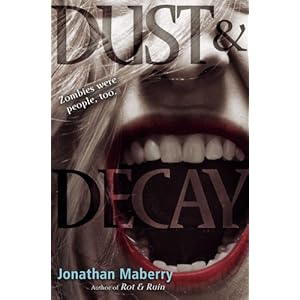
In all, this was a well written book and I highly recommend it.The second book of this series is called Dust & Decay and comes out soon - can't wait to check it out!


Read this if you liked:
Up next: Review of I am Number Four by Pittacus Lore
Cheers!


From Venice to Malta: A Review of Roberta Rich's "The Midwife of Venice"

At midnight, the dogs, cats, and rats rule Venice. The Ponte di Ghetto Nuovo, the bridge which leads to the ghetto, trembles under the weight of sacks of rotting vegetables, rancid fat, and vermin. Shapeless matter, perhaps animal, floats to the surface of Rio di San Girolamo and hovers on its greasy waters. Through the mist rising from the canal the cries and grunts of foraging pigs echo. Seeping refuse on the streets renders the pavement slick and the walking treacherous.
The Midwife of Venice, Roberta Rich, page 1.

 Hannah Levi, a midwife in the Venetian ghetto has gained renown for her skill in coaxing reluctant babies out of their mother’s bellies using her “birthing spoons”, a rudimentary form of forceps. One night a Christian nobleman, Conte Paolo di Padovani appears at Hannah’s door in the Jewish ghetto with an impossible request.He implores Hannah to help his dying wife and save their unborn child. But a Papal edict has made it a crime, punishable by death, for Jews to render medical treatment to Christians. The Conte offers her a huge sum of money, enough to enable her to sail to Malta to ransom her beloved husband, Isaac who has been captured at sea and is a slave of the Knights of St. John.

Against the Rabbi’s advice, Hannah goes with the Conte and delivers the infant, Matteo, a child who captures her heart.  As she prepares to depart for Malta to rescue Isaac, she discovers that the baby’s uncles are plotting to murder the baby in order to seize the family fortune.  In the absence of the Conte and his wife who are in Ferrara on urgent family matters, there is no one but Hannah to save Matteo. She enlists her sister Jessica who is a courtesan and living as a Christian outside the ghetto. An outbreak of the plague traps them in Venice and makes them easy prey for the baby’s murderous uncles.

Woven through Hannah’s travails are Isaac’s hardships as a slave in Malta. Blessed with wit and charm, he earns scraps of food as a scribe and pins his hopes for freedom on bartering his precious silkworm eggs. To reach Isaac, who believes she has died in the plague, Hannah must outsmart the di Padovani family and sail to Malta before Isaac manages to buy his passage to a new life in Constantinople.

                I got this book for my birthday, from awesome roommate M. She found it on my Amazon Wishlist, which is so bad since now I just post things on it to excess and expect that people will keep looking at it and getting me stuff … Anyways.
 
                I read the synopsis of it and was instantly hooked – it was a historical love story with an uncertain ending. So when I unwrapped it I was all excited and could not wait to read it. I started it before an exam (don’t judge – it’s my relaxation technique), And I couldn’t put it down until it was done! It was riveting and so sad, and so frustrating – the bulk of the book takes place over only a couple of days – but they are tension-filled frustrating days that force you to read onwards so you know how it ends. 


                The main character is Hannah – a midwife who lives in the Jewish ghetto in Venice – a cramped, smelly place where people are forced to live due to an increasingly erratic and discriminatory Church presence in the city. The edicts passed in the city also prevent Jewish people from doing certain jobs, especially where it pertains to Christians – for example, no Jewish doctor is to treat a Christian person (though the reverse is also true: no Christian doctor is allowed to treat a Jewish patient). The city is ripe for conversion – the aim being to stop the spread of Judaism through forced conversion – a practice that is held very negatively in the book, which I will come back to later. 

                In this environment, Hannah waits for news of her husband, Isaac, who went to sea against her express wishes, and then got himself captured. Hannah’s struggle with this and her bargaining and negotiation for the means to free him make plain three things: first, that theirs is a love that is all-consuming – though the Rabbi (A most vile man, in my opinion) tells her she can divorce herself from Isaac and that there is no point in waiting for him, Hannah  (and later Isaac) press on towards each other, knowing that if not in this life – then they would be together in the next; second, it highlights the precarious and dismal situation for women alone – sure, she’s a midwife – saves babies and mothers all the time – but she is a woman, and a Jewish one at that – there is not much in the way of opportunities or chances for her to release herself from the ghetto; finally, her struggle and willingness to fight for her husband adds a layer to her character that is otherwise invisible throughout the book: the Rebel. 


                When I say that Hannah is a “rebel” when she fights for her husband, I suppose I would get a lot of eyebrows being raised and questions of just how a wife fighting for her husband is in anyway rebellious, but bear with – there is a line of thinking here I hope is logical. You see, Hannah is Jewish – what we today would consider an Orthodox Jew. She is strict about her beliefs and believes them fully, obeying the rules of the religion – even when it means shutting out her newly converted sister. Now granted, I am an atheist and a huge feminist, so this is definitely tainted with my own bias – but I would never give up my sisters because a man who claimed to be my religious superior told me to. It just wouldn’t happen.
              
              Not so with Hannah – the only thing that makes her ever question the legitimacy of the Rabbi’s orders is when he prohibits her from trying to save her husband. And she rebels – she goes with the Christian man – the only one depicted in any kind of good light – and she earns the money she needs to free her husband. With dire consequences – the scheming Rabbi, who can see he is losing influence with Hannah (and that she may yet become a danger to the Jewish population) sends a messenger to Isaac trying to get him to divorce Hannah in order to retain money enough to free himself (yeah, talk about insult to injury). The road to Hell, and all that. 


                The men around Hannah in Venice brought me back to my Undergraduate days when I was taking a class with the amazing Barbara Todd on Women’s European History. It was a hard course I struggled with – the injustices of the treatment of women through the centuries is a tough pill to swallow – especially when the curse runs all the way into modern times, and you realize with a sinking feeling that inequality and control of women is still very much alive and encouraged. Hannah is, at the beginning of the book, under the control of many men – her husband is gone, but her Rabbi has direct authority over her, and then the Christian rulers of Venice have indirect control over her in a frightening way. Though a lot of the book is her succumbing to these pressures, her bouts of rebellion – that begin with trying to save Isaac and move to saving another man, and then herself – make her grow – they make her question her own faith and find it stronger when she moves through those obstacles to get to the point where she can recognize the control for what it is, and be in a position to thwart it.


                So as a feminist – though I struggled with her and was growingly frustrated with her, I liked Hannah. I liked her for her spirit and her eventual understanding, and the way that by the end, she had grown to accept others around her, instead of fearing them. 

                Not so much for Isaac. He has a hate-on for converts. Now, again, I will show my bias. My family converted – Jewish to Catholic, back in the day. So far back that it doesn’t really matter anymore and doesn’t affect any of us except when other people find out about it. Like I said, I am an atheist, so the religion of my forbearers is not so much an issue for me. But when Isaac ranted on and on about converts betraying this and that, and Hannah’s original sentiments that followed the same lines – I was angry. So angry. I mean, who is anyone to judge? The fact that Isaac, by the very end, is finally ready to admit that, hey – maybe the Converts are not as evil as he thinks, I had nearly given up on him. It takes Hannah and her endurance and her ability to touch other women around her to bring out a semblance of understanding in her husband. 


                Which is another reason I like the book. It is all Hannah – Hannah save the day, Hannah flees and survives, and Hannah forces understanding onto her husband – and he loves her enough and trusts her enough that he takes it and (we’re left t hope) changes his own attitudes. 


                Again, am feminist. Love those stories that put a lens of hierarchical structures where females are the voice. I recommend this book – I think it was a great story, and I think that though frustrating, the feel good (or at least, feel better) ending is worth it. 

                There can be made the argument that the title - The Midwife of Venice - is in direct homage to the Shakespeare The Merchant of Venice, which deals with similar issues of class and religion, and a lot of the names and refrences are recycled therein. However, I think the merits of the book lie in the female viewpoint, rather then the allegory - and much better ending - to The Merchant of Venice (Besides, I have always hated that play - Shylock should have gotten his pound of flesh - though that is disgusting - mostly because Antonio and the others were just so unlikeable. Portia and Jesisca were the only interesting characters with any development - and they totally settled.)


This book is for you if you liked:
·         The JoyLuck Club by Amy Tan
·         The Helpby Kathryn Stockett
·         The BirthHouse by Ami McKay

Next to Review: Rot and Ruin by Jonathan Mabury


Cheers!


Tuesday, July 19, 2011

(Tardy) Half Year Challenge Check Up!

So totally missed June ... I blame the two bar exams I wrote. They sucked up June and spat it back at me with a couple of days left to enjoy the sunshine before work started. Oh well, that is my story. Anyways, I had planned on doing a Challenge check up, as it were, to see where I am in the Challenges. So I will do a tardy one now!


First Challenge:
Off the Shelve (i.e. Decreasing my physical TBR pile)
Goal = 75
Read to date = 15
Comments: Okay, so with ... oh jeez, with 5 months left, I have to read 60 more from my TBR pile (the one I use as fortifications in my room. I won't list all 60 here, but a few on the list are "The Last Witchfinder" by James Morrow, a bunch of historical romances that have sat blinking at me for a while now, a few Dean Koontz and Stephen Kings that I have been lazy with, and the last book in the Hunger Games Trilogy, Mockingjay.

Second Challenge:
Historical Fiction Reading Challenge
Goal = 10
Read to Date = 8
Comments: So looking back, I didn't quite follow my own guideline, did I? What can I say, stuff is thrown at me and I read. I have two more to meet the challenge - which is awesome! But I intend to so go above and beyond the ten that I had to read - I mean, asides from the ones I read ... I have to read the ones on the list too...

Third Challenge:
Zombie Reading Challenge
Goal = 12
Read to Date = 4
Comments: Wow, I am doing terribly, aren't I? Anyways, this should be my favourite - I mean, it's zombies! But somehow my fictional zombies this year have mostly been in movie or tv form (Yes, Walking Dead. SO awesome!) I lost "The Dark and Hollow Places" in my move, and recently found it again (with my law books ... how weird? Very), so that will bring the number up to 5, and then I need to finish Zombies vs. Unicorns - which is awesome but heavy to carry so gets left next to my bed a lot ... I did read "The Dead-Tossed Waves", "Dog Blood", "Rot and Ruin" and started "Z" ... I just have to get my hands on the last two installments of the Boneshaker series, finish "Queen Victoria: Demon Hunter", pick up "Generation Dead" and I am golden. Love zombies. I also need to get my mitts on the series that begins with "Married with Zombies" - looks hilarious.


Fourth Challenge:
Vampire Reading Challenge
Goal = 20
Read to Date =  5
Comments: Oh, Vampires ... "Teeth" was amazing, I will reiterate that. It was well written and the stories were haunting - I am still thinking about them. Anyways, so I need 15 more to meet this particular challenge - and I have the books. I am supplementing my list with some more Parasol Protectorate - "Blameless", "Changeless" and "Heartless" - and then refer to the list --> need to finish Rachel Caine's series - the first one blew me away, and I got the second, third and fifth (don't ask) for my bday, so that is a definite must! Needless to say: Like the Historical Fiction, I have loads of these that need to be read - hopefully all within 5 months!

Fifth Challenge:
Shifter Reading Challenge
Goal = 20
Read to Date = 4
Comments: Yeah, well in my defense ... no, no defense. I love werewolves almost as much as I love Zombies. I guess I am just off my game this year? Anyways, of the four I did read - three were on the list - "Soulless", "Lunarmorte", and "Sisters Red". In my Immediate TBR pile, a further few are included: "Changeless", "Blameless", "The Lost Saint", "Forever" and "Red Riding Hood". I will have to beef it up though if I am to make the challenge. And I will make this challenge ...

Sixth Challenge:
Dystopian Reading Challenge
Goal = 15
Read to Date = 3
Comments:... Yeah. No excuse. Sorry. I suck. Will do better! Will meet this challenge!

Seventh, and last Challenge:
Morbid-Romantica Challenge
Goal = 12
Read to Date = 11
Comments: Yay! I finally come out on top! Go Me! I confess, though - this one is easier then the rest because of all the categories and such. The Mad Scientist outdid herself on this one! Thank the Goddess! Anyways, I think this has been the most fun of all the challenges!

Alright, so I have a lot of work to do - but I am getting there! Wish me luck as I spend the next 5 months and a bit, reading my way through these challenges! :)